
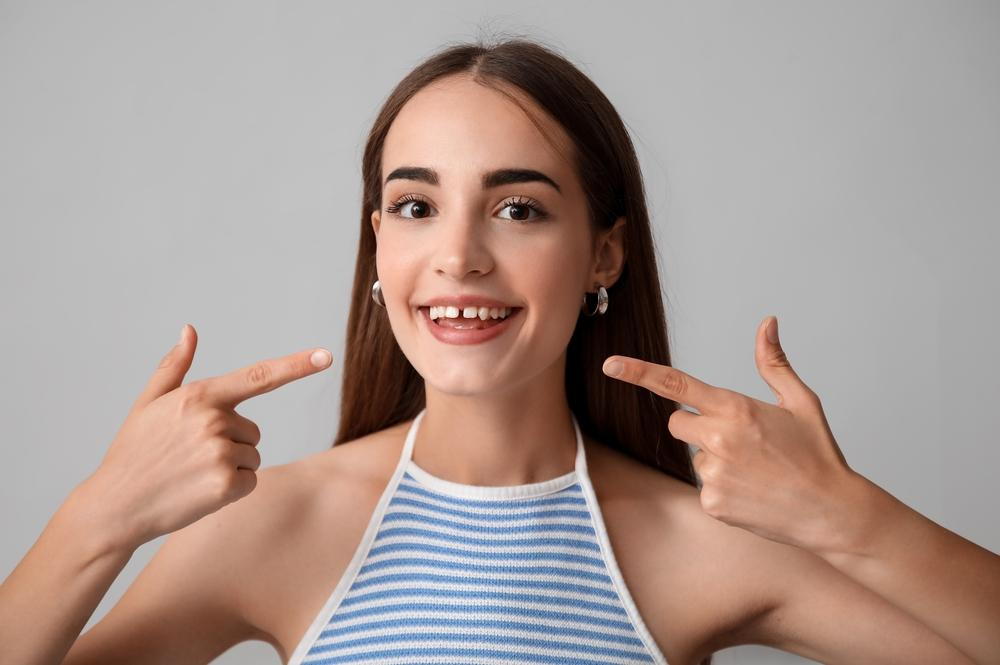
As a family dentist in Pleasanton, I often meet patients who are unhappy with the small spaces between their teeth but don’t want to commit to braces. These gaps, also called diastemas, can make some people self-conscious when smiling or speaking, even if their teeth are otherwise healthy.
I’m Dr. Mona Gokani, and I want to reassure you that modern dentistry offers several comfortable and discreet ways to close these gaps without orthodontic braces. Whether your spaces are small or noticeable, there are minimally invasive treatments that can improve your smile’s appearance and balance while maintaining your natural tooth structure.
Gaps can appear for several reasons. Sometimes, teeth are naturally spaced apart because of genetics or differences in tooth size. In other cases, gum recession, missing teeth, or habits like tongue thrusting can cause the teeth to shift over time. Fortunately, these spaces don’t always require traditional braces or long orthodontic treatment. Depending on the cause and size of the gap, cosmetic and restorative options can often create a smooth, even smile in just one or two visits.
Dental Bonding: A Fast, Natural-Looking Solution
One of the most common ways I close small gaps is through cosmetic bonding. This treatment involves applying a tooth-colored composite resin directly to the teeth to reshape them slightly and fill the space. It’s a simple, comfortable procedure that usually requires no anesthesia and can be completed in a single visit.
I carefully select a resin shade that matches your natural enamel and sculpt it to blend seamlessly with the rest of your teeth. Once the shape is perfect, the resin is hardened with a curing light and polished for a smooth finish. The result looks completely natural and can last several years with good oral care. Bonding is ideal for patients looking for a quick, cost-effective option to correct one or two small gaps.
Porcelain Veneers: A More Durable And Cosmetic Option
For patients seeking a longer-lasting and more transformative result, porcelain veneers can be an excellent choice. Veneers are thin, custom-made shells that fit over the front of the teeth. They can close gaps, correct mild alignment issues, and improve the overall shape and color of your smile.
Veneers require a bit more preparation than bonding, but the results are often stunning and can last over a decade with proper maintenance. During the process, I remove a small layer of enamel to ensure a perfect fit, then bond each veneer securely to the tooth surface. The porcelain mimics the translucence and shine of natural enamel, giving your smile a bright and even appearance.
Dental Crowns Or Bridges For Structural Gaps
If gaps exist because of missing or damaged teeth, a dental bridge or crown may be the most appropriate solution. A bridge replaces one or more missing teeth by anchoring artificial teeth to healthy neighboring ones. This restores both the function and appearance of your smile while preventing other teeth from shifting into the space.
For a single damaged tooth, a crown can improve structure and alignment while closing the visible gap. Both options are durable and made from lifelike materials that blend naturally with surrounding teeth.
Clear Aligners As A Discreet Alternative
Although braces are not the only way to fix gaps, clear aligners such as Invisalign® can still be an appealing choice for patients who want to avoid metal brackets but need more movement than bonding or veneers can achieve. Aligners use gentle, consistent pressure to gradually close spaces while maintaining comfort and aesthetics. They can be removed for eating and cleaning, making them a flexible option for busy adults.
During your consultation, I’ll evaluate your teeth, bite, and goals to determine which treatment is best suited to your needs. Sometimes, combining treatments, such as aligners followed by bonding or veneers, produces the most balanced results.
Maintaining Your Results After Treatment
Once the gaps are closed, maintaining good oral hygiene is key to protecting your investment. Brush and floss daily, schedule regular checkups, and avoid habits such as biting hard objects, which can chip restorations. If you had aligner treatment, wearing a retainer at night helps keep your teeth in position.
A healthy, even smile not only enhances confidence but also supports proper bite alignment and gum health. By addressing gaps early, you can prevent potential shifting and improve your smile’s long-term function and appearance.
Frequently Asked Questions About Fixing Gaps Without Braces
What Causes Gaps To Form Between Teeth?
Genetics, tooth size differences, gum recession, or missing teeth can cause gaps. Habits such as thumb-sucking or tongue thrusting during childhood can also contribute. Understanding the cause helps determine the best way to close them effectively and permanently.
Is Dental Bonding A Permanent Fix For Gaps?
Bonding is durable but not permanent. It usually lasts between 5 and 10 years, depending on how well you care for your teeth. Avoid biting hard foods or using your teeth to open packages, as that can chip the composite material. Routine polishing can help maintain the smooth surface.
Are Veneers Better Than Bonding For Closing Gaps?
Both options have their benefits. Bonding is quick and cost-effective, while veneers are more durable and stain-resistant. If you’re looking for a longer-lasting cosmetic improvement that can also enhance shape and brightness, veneers are often the better option.
Do Clear Aligners Work For All Types Of Gaps?
Clear aligners work well for mild to moderate spacing issues, but large gaps or complex alignment problems may require additional restorative treatments. I can evaluate your specific case and determine if aligners will achieve the result you want.
Does Insurance Cover Cosmetic Gap Treatments?
Most insurance plans classify bonding, veneers, and aligners as cosmetic procedures and may not fully cover them. However, if the treatment restores function or prevents further dental issues, partial coverage may apply. My office team can review your plan and help clarify your options.
How Do I Know Which Treatment Is Right For Me?
The best option depends on your oral health, budget, and aesthetic goals. During your consultation at my Pleasanton dental office, I’ll examine your teeth and explain the pros and cons of each approach so you can make an informed decision.
Call Mona Gokani, DDS, Today For An Appointment
If you’re tired of seeing gaps in your smile every time you look in the mirror, there’s no need to wait for braces. I, Dr. Mona Gokani, offer several effective and minimally invasive ways to help you achieve the even, natural-looking smile you’ve always wanted.
Contact our Pleasant cosmetic dentist, Mona Gokani, DDS, at (925) 462-1464 to schedule an examination. Our clinic proudly serves patients in Pleasanton and throughout the surrounding California area, helping families enjoy healthier, more confident smiles every day.